Astro Panchang
Panchang is an Indian alamanac for tracking weather events, days and months. The system uses the phases of moon, along with the position of the sun in the zodiac to track months.
This type of tracking months with the movement of Sun in the sky is a commanality in many cultures and civilizations. This was probably done to track the seasons and weather.
The application allows the user to view details at month level, and at day level. For viewing at date level click on any date, and use the arrow keys on the page to traverse the dates.
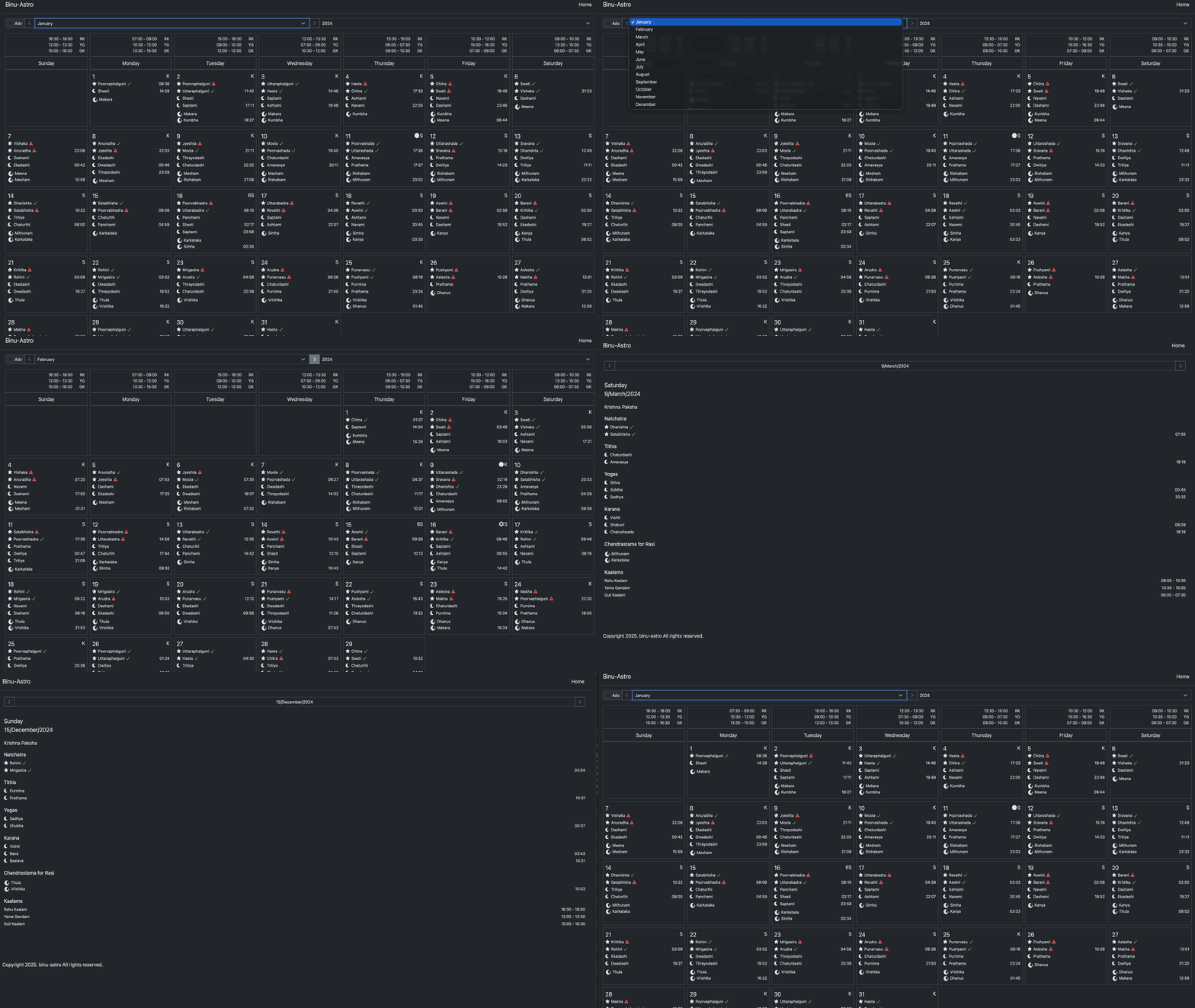
The Indian Panchang system has 5 parts.
- Varam or Weekday - tracked by the day of the week. Strangely the whole world follows an unbroken weekday system. Which are of 7 in numbers, named after the brightest objects in the sky, that is the Sun, Moon and the visible planets.
- Natchatra or Star - tracked by position of the Moon in the sky, the sky is divided into 27 parts, (sub longitudes) each star is named by a star, which is in close proximity to the position.
- Tithi or Phase - tracked by phase of the Moon. The phases are divided into 14, along with new moon and full moon, which are zeroth phase and full phase of the moon. So in total there are 15 phases, in each direction of the phase which is waning and waxing. In total gives you 30 phases. The reason why our calendaring system has 30 days in a month.
- Karana - one half of a Tithi, each Tithi or phase is dividen into 2 equal parts. Each Karana is given a unique name.
- Yoga - the longitudinal position of Sun and Moon are added, and then placed in the Natchatra parts.
In addition to the above,
- Paksha - Waning or Waxing. Krishna Paksha indicates waning moon, the phases changes from full moon to new moon. Sukhla Paksha indicates waxing moon, the phases changes from new moon to full moon.
- Maasa or Month - the sky is divided into 12 parts, each of 30 degrees. Each part is named with a zodiac sign. The month is the position of the Sun in each part.